
THE GOLDEN JUBILEE BOOKLET · 1926 TO 1976
Fifty Fruitful Years
The story of Milton Baptist Church
By Raymond Griffiths and Cyril Lemon
Originally published in June 1976
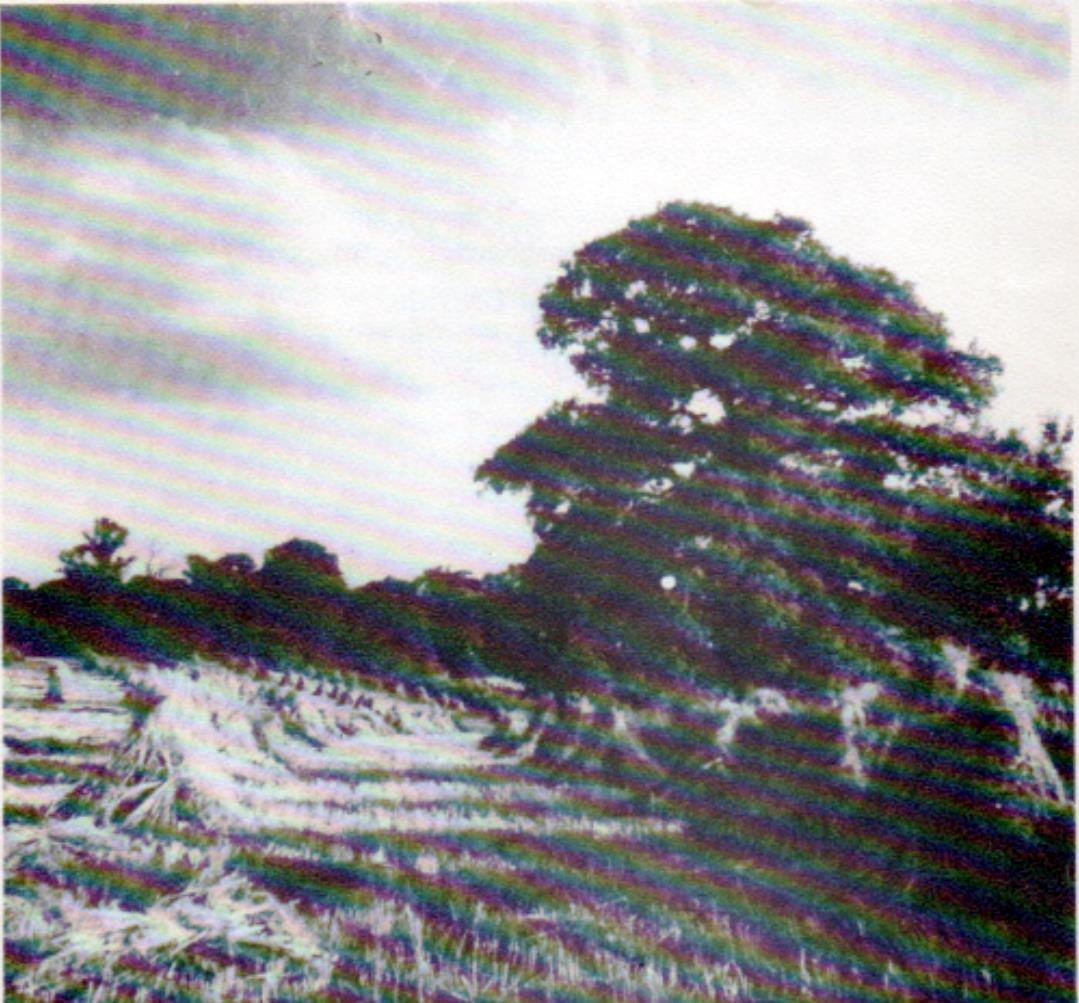
Words for the Golden Jubilee
Reverend Philip Gathercole, Minister, writes:-
It is a privilege to commend this short history of Milton to our members and to our many friends, not least the visitors who come each year to enjoy a holiday in Weston-super-Mare and to find some spiritual refreshment in our church.
At a Golden Jubilee we look backwards with gratitude and forward with anticipation. God has been good to us. The Gospel of the Crucified Saviour and Risen Lord has fashioned our lives and that of those Christians who have laboured with us but who are now in the nearer presence of Christ. We have found deep joy and satisfaction in sharing the Good News.
Personally, my ministry has been enriched by the practical love and warm response of people who by their prayers and friendship have always lifted me to greater endeavour.
I am grateful to those who have researched, written and prepared this instructive and inspiring history. But this publication is not an academic exercise. We have reviewed the past so that all that is worthy may motivate us for future days.
This, this is the God we adore,
Our faithful, unchangeable Friend: Whose love is as great as His power, And neither knows measure nor end.
This Jesus, the first and the last, Whose Spirit shall guide us safe home: We’ll praise Him for all that is past And trust Him for all that’s to come.
Reverend Ronald S. Cowley, Area Superintendent, writes:-
I have been thrilled to read “FIFTY FRUITFUL YEARS”. It is an apt title for a splendid record of Christian witness. All who read it will rejoice in the growth of the Christian work at Milton, accomplished in a century of decline. All will rejoice at the wholeness of the Gospel which has been at the heart of the church’s life there - in word and in deed. When every allowance has been made for the fact that Milton has been an area of increasing population during the period covered by the story, it is a remarkable record of men and women dedicated to Jesus Christ and the building of His church.
One lesson comes through to me - what can happen when individual churches work together. We, of course, belong together because we are in Christ. But that “togetherness” has not always been expressed in the practical, dedicated and determined way which helped to bring Milton Baptist Church into being. And now, from a position of strength, Milton Baptist Church gives to others - other churches, the community, the Bristol Association.
Rejoice whole-heartedly on your 50th birthday! Praise God for His goodness and pray to Him for His wisdom and strength for the years ahead! The wider fellowship of Baptists join you in your rejoicing and your praying.
Back to contentsThe beginnings, 1925 to 1938
“TODAY IS THE HARVEST OF YESTERDAY AND THE SEEDTIME OF TOMORROW”
In preparing a short record of the first fifty years’ history of our Church, one of the problems is the elimination of things of less importance and drawing attention to the more important happenings during the period under review. In reading through minute books, magazines and other Church records, one comes across the names of so many members, who in their time have rendered invaluable and sacrificial service to our Church and to the Kingdom, and one would like to name these friends in our history. To do so however, would considerably lengthen this record, and we must therefore content ourselves with a brief, but nonetheless sincere expression of thanks to all those who, during the past fifty years, have given so wonderfully, and in so many ways, of their best to the work of God in the witness of this Church,
Beginnings
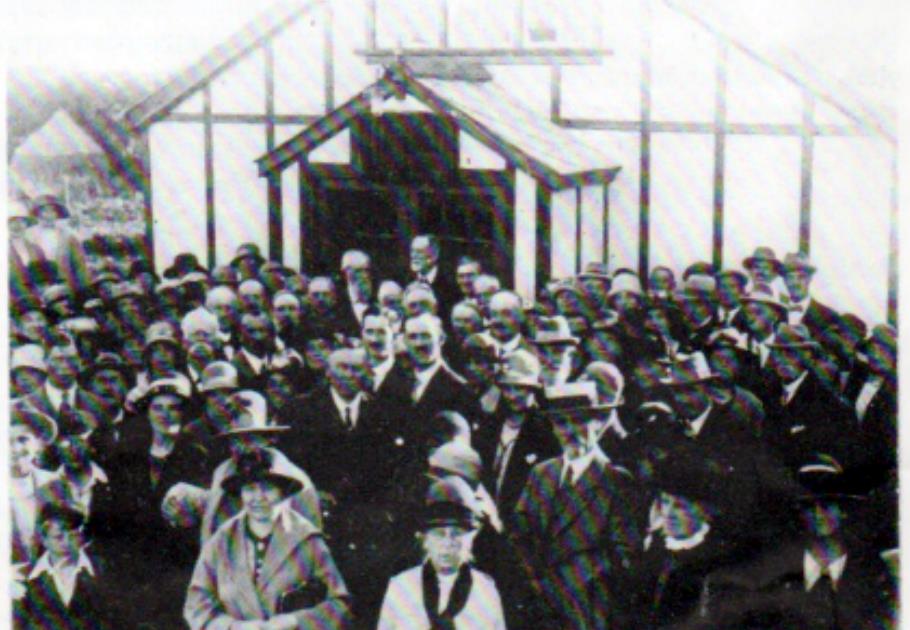
To commence our history it is necessary to go back to the summer of 1925, when the Baptist Churches of Weston-super-Mare were host to the Bristol and District Association of Baptist Churches for its annual meetings. At this Assembly attention was drawn to the expanding district of Milton, and the opportunities presented for the establishment of a Christian fellowship to serve the area. A meeting of the Deacons of the three Baptist Churches - Wadham Street, Clarence Park and Bristol Road - agreed to finance the purchase of a site in Salisbury Road and to erect a small hall there. The building was opened on Thursday, 12th August, 1926, when the minister of Clarence Park Baptist Church, the Rev. Herbert G. Drake, gave a report on the formation of this new work, which was to be under the oversight of the three churches, by means of a committee comprising members from the churches, together with members appointed from the new congregation.
The first Sunday service was held in the evening of the 15th August, but by public request, morning services began a week later, and because of the encouraging numbers attending, they were continued. Local laymen supplied the pulpit on most Sundays.
Sunday School
A very encouraging start was made in the Sunday School, and within a short space of time, the average Sunday attendance was sixty. However, in spite of the faithful labour of a few who were interested in the new cause, very little progress was seen in the first few years and not a few problems were encountered, and towards the end of 1928 a meeting of the united diaconate agreed that the Clarence Park Church should assume full responsibility for the fellowship at Milton.
In 1929 a new church committee was formed, under the leadership of the Rev. C. H. Thompson. This was made up of appointed members from his own church at Clarence Park, together with three members of the Milton congregation - Messrs. Bidmead, Rossiter and Russell. There followed signs of small but fairly steady growth.
Early in 1931, Mr. J. A. Bailey, a member and deacon of Wadham Street, was appointed to superintend the work at Milton and while this arrangement showed early promise, it was unfortunately short-lived, owing to the ill-health of Mrs. Bailey. Throughout this period the Sunday School continued to grow, however, and it was necessary to obtain additional accommodation by renting an adjacent garage for use as a classroom, at a cost of 3s. 6d. per week; an arrangement which continued for some time.
Lay Pastor
In November 1931, it was decided that a permanent Lay Pastor should be sought, who could devote his time to the pastoral needs of the community. An approach was made by Mr. Thompson to Mr. J. W. Lawrence, a retired Police Sergeant who, with his wife, had recently moved from Newport, Monmouthshire, to reside in Milton. Mr. Lawrence accepted the invitation and was welcomed into the fellowship as Lay Pastor by the Church Secretary, Mr. Frank Boobyer, on the 25th January, 1932, The coming of Mr. Lawrence proved to be the answer to the prayers of many friends who were concerned about the future of Milton. He was a very acceptable preacher and this gift, combined with considerable powers of organisation, a very pleasing personality and a capacity for real friendship, soon made an impact upon the work. After only six months he was reporting to Mr. Thompson that the Hall was wrongly situated in Salisbury Road, and that it was time that thought should be given to the possibilities of moving to another site.
A little later, he reported that there were 153 scholars in the Sunday School, and eighteen teaching staff, and he expressed the belief that this number could be increased by 50, but for the fact that “we cannot possibly entertain further scholars without additional accommodation”. Evening congregations were averaging about 80 and the hall was filled to capacity for special occasions such as Anniversary or Harvest services. Towards the end of 1932, a band of about a dozen ladies formed themselves into a branch of the Baptist Women’s League. This rapidly grew in usefulness and served the fellowship by arranging sewing classes and supervising social events.
A New Site
Mr. Lawrence believed that within a few years Baytree Road could well be in the centre of Milton, so rapidly was the district developing, and this led to inquiries as to the possibility of obtaining a site for the new premises there. Writing to Mr. Thompson, he compared the excellence of the suggested site in Baytree Road with the existing one in Salisbury Road which was “an unmade road, with holes often full of water, leading to a cul-de-sac, the dumping ground for all sorts of rubbish, and with a pig-stye there as well. The little Church also has to contend with a fried fish and chip shop on one side of it, and a builder’s yard all along the front. With no hope of improving such an unattractive place for years, is it any wonder that prejudice is strongly against it? I know many estimable people who are prepared to join us when we get away from Salisbury Road”.
Mr. J. Wheway of Clarence Park, who was convinced that with improved facilities for worship and Sunday School work there was a great future for the Milton cause, worked unceasingly for many months to obtain a plot of land in Baytree Road, and in February 1933, Mr. Lawrence announced, with obvious pleasure, that negotiations for the new site had been completed and the land purchased for the sum of £415. Mr. Wheway was appointed Treasurer for the new Building Fund and Mr. Fred Bessell became Treasurer for the general Fellowship account, taking over from Mr. W. H. Humphries of Clarence Park, whose poor health made it impossible for him to continue in office.
First Baptisms
At the end of the first twelve months of Mr. Lawrence's ministry, there were many signs of blessing and much to encourage. There was a Young Worshippers’ League with a membership of forty-five; a regular mid-week Prayer Meeting; a Girls’ Brigade Company which was started in November 1932 by Miss Edna Morgan and had a membership of fifty-one; the Band of Hope had twenty-two members, and a choir of fortyfive ranging in age from ten years upwards, led the worship on Sundays. Mrs. C. H. Thompson presided over a Women’s Own meeting of a hundred members with an average attendance of seventy-five.
On Sunday, 2nd April, 1933, seven friends from Milton were baptised at Clarence Park, the first baptisms in the history of the fellowship and the direct outcome of a mission held by the Rev. C. H. Thompson at Milton in October 1932. A month later (May 1933) a Church Membership Roll was started and twenty-five members who had joined the Milton branch of the Clarence Park Church were enrolled.
A service of dedication of the new Baytree Road site was held on the 14th June, and the printed Order of Service was headed by a splendid artist's impression of the proposed new premises.
Sunday School Superintendent
In January 1934 Mr. R. W. Jones, who had given sterling service as Sunday School Superintendent, felt compelled to resign because of failing health. He had watched the school grow until there was an average weekly attendance of 150 scholars and it had become necessary to use a garage and a builder's loft as classrooms. It was with great sorrow that the church learned of his passing just about a month after he had relinquished the work. Perhaps a fitting epitaph to him and his work was a second baptismal service, held at Clarence Park in the following August, when five young people from Milton witnessed for their Lord.
Building Fund
Members of the Church and congregation were participating in a weekly savings scheme towards the building of new premises in Baytree Road. It was agreed that £2,000 would be needed before any building work could actually commence. Mr. Thompson compiled a brochure giving details of the work at Milton and also information about the proposed new building, and this was distributed to Christian friends throughout the country in the early part of 1935, with the result that many gifts were received to help swell the Building Fund. By November it became apparent that a start on the building would not have to be long delayed.
Mr. J. W, Lawrence
At the beginning of 1936 the health of Mrs. Lawrence, who had been a very real “Mother in Israel’ to the people of Milton was giving cause for concern. Mr. Lawrence also had been very unwell during the winter of 1935-36, and in May of 1936 he told the Church of his decision to resign from the pastorate, to take effect in September. This was a decision that saddened the fellowship, for he had ministered with so much blessing and had been wonderfully supported, in every way, by his wife. They had earned the respect and affection, not only of people within the fellowship, but of many others in the district and town who had no ties with the Church.
Legacy
At about this time, news was received of a legacy of £1,500 under the will of a Miss Bruton, and to quote from the Church magazine, it was “a totally unexpected but most agreeable bombshell,..... Although we had been praying for help.... this gift nearly took our breath away...... What we have longed to see will now be possible in the near future”. Miss Bruton was never a member at Milton but had been for many years in membership at Wadham Street, and from its beginning had taken a very keen interest in Milton.
Full-Time Minister
With the resignation of Mr. Lawrence, it was decided to seek a full-time minister who would become assistant to Mr. Thompson at Clarence Park, but with special responsibility for the work at Milton. The Rev. W. A. L. Pearce was invited to preach at Milton in the autumn of 1936 and in January of the following year a hearty invitation was extended to Mr. Pearce, which he was pleased to accept. His ministry commenced on the 6th June, 1937.
New Building
At this time the fellowship had some £2,000 in the Building Fund, with promises which increased this to a total of £3,500,
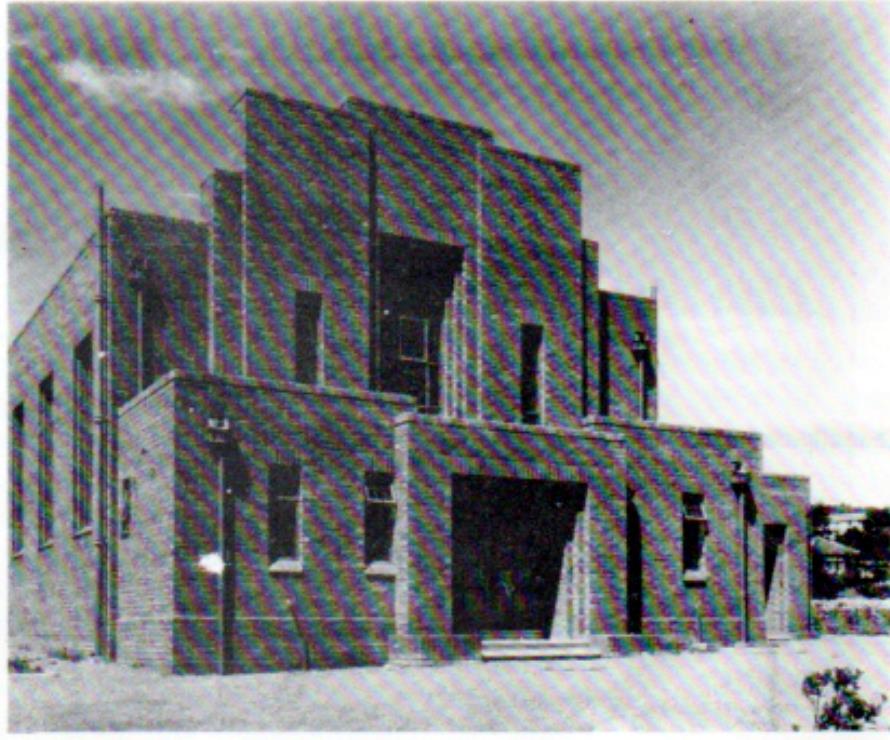
It was estimated that the cost of a new building, together with furnishings, would be in the region of £4,000. Plans and specification having been prepared by Messrs. Ball and Pope, a local firm of architects, invitations to tender were sent out to various builders, and a contract was signed on 1st July, 1937 with Messrs. John Dyer and Son for the erection of a new building on the Baytree Road site, for the sum of £3,280, This was intended to be the first phase of a scheme which envisaged the sanctuary itself being erected at a later date, when the hall now to be built would become the main hall of the Sunday School.
Arrangements were made for the stone-laying ceremony to take place on the 23rd September, and it is of interest to note that Mr. Pearce was asked to inquire of Messrs. Dyer, if the workmen on the site would be losing time because of the ceremony, and if this was so, to request that compensation be made to them,
Opening
The opening date was fixed for the 27th January 1938 and the ceremony was performed by Mr. Wilson Black, the preacher being the Rev. W. R. Miller, the Area Superintendent. The local Gas Company was instructed to floodlight the building for seven nights at a cost of £5!
The Mayor of Weston and Councillors attended the first Sunday service on the 30th January and in the evening there was a baptismal service, A few months later the old premises in Salisbury Road were sold, and the fellowship was left with a bank overdraft on the Building Account, of £618. 19s, 11d.!
Back to contentsWar and recovery, 1939 to 1949
World War II
In 1939, as the threat of World War II drew ever nearer, an appeal was made to the congregation to invite trainees stationed at Locking R.A.F. Camp into their homes, and this marked the beginning of a work among the men in training at Locking, which continued with great blessing, for many years. With the outbreak of World War II, Milton - in company with other churches in the town - suspended Sunday evening services and met for worship at 3 o'clock in the afternoon. Within a few weeks the need for an evening meeting for young people and R.A.F. personnel was agreed, and by March 1940 the Church was again holding regular Sunday evening services.
School Master
A number of schools from London were evacuated to Weston, among them was Latham School, some of whose scholars used our church premises during week-days. One of the teaching staff was a Mr. Norman Finney. At a church committee meeting in May 1940, Mr. Pearce intimated that he had accepted a call to Heneage Street Baptist Church, Birmingham. A gracious, friendly man, and a very thoughtful preacher, Mr. Pearce had seen the erection of the new premises and the membership of the church doubled during his brief pastorate of three years. The fellowship was saddened at his departure.
Pastor
At a special church meeting on the 12th June 1940, it was intended to make plans to seek a new minister, but a letter from Mr. Finney was read at the meeting in which he offered to take the Sunday services, and also to give pastoral help during the week, and his offer was accepted gratefully because of the uncertainty brought by the War. Arrangements were made for him and his family to occupy the Manse in Baytree Road until such time as it was needed for a new minister. Mr. Finney wasted no time in getting into the work of the fellowship. He introduced a “Brick Scheme” to help liquidate the debt of nearly £500 remaining on the Building Fund, Friends were asked to buy imaginary bricks at sums ranging from 2s. 6d. a brick to £5 for a block of bricks, and in a very short time he was able to report contributions or promises amounting to over £53, By mid-1941 more than £142 had been raised.
During an air raid early in 1941, an incendiary bomb came through the roof of the church, Fortunately it was very quickly dealt with, and the damage was slight, but its scars can still be seen on the floor of the Church.
Faithful Workers
Owing to the pressures brought about by war-time conditions, both Mr. Boobyer (the Church Secretary) and Mr. Bessell (the Church Treasurer) gave notice that they did not intend to seek re-election to office, and at the annual church meeting in November 1941, Mr. A. Herring was appointed Secretary, and Mr. A. M. Lever - Treasurer. Mr. Boobyer and Mr. Bessell had given faithful and diligent service to the Church and the Church owes them a great debt for their faith and persistence during days when there were many difficulties and very little to encourage, Tribute should be paid to their wives, who helped and supported them in every way possible. Mrs. Boobyer served as church organist for a very long time.
The rent received for the use of the church premises as a day school proved of great help in reducing the debt on the Building Fund, and by the end of 1941, only £100 remained to be cleared. Altogether, nearly £214 had been raised through the “brick scheme’. It was resolved that when the debt had been fully repaid, any additional money collected should be set aside for the completion of the whole of the building scheme, which envisaged the erection of a sanctuary on the west side of the existing buildings.
In 1943, the Church Secretary announced that he found he was unable to give enough of his time to the work and Mr. Rex Brown was elected to serve as Assistant Church Secretary, and thus commenced a period of active service by Mr. Brown which happily continues to this day.
In January 1944, the Rev. Cecil H. Thompson celebrated the 15th anniversary of his ministry at Clarence Park, and as Superintendent minister at Milton. An opportunity was made to present him with a monetary gift as a token of the esteem and affection in which he was held by the fellowship.
With the liquidation, in 1943, of the debt on the Church buildings the fellowship began to prepare for the time when it would again have a full-time Pastor, and a fund was opened in February 1944 to make financial preparation for the calling of a new minister, The members were also challenged about the completion of the Church Building Scheme, and a new Building Fund came into being.
First Missionary
Miss Sybil Staples, one of our Church members, who was brought up in our Sunday School and was now teaching there, felt the call to full-time service for the Lord, and during 1943-44, she gave up her teaching appointment at Walliscote Road School and began training at Carey Hall. Her offer for service overseas was accepted by the Baptist Missionary Society and she was appointed to Udayagiri, The Kond Hills, Orissa, India. At the valedictory service on 6th September 1945, Mr. Thompson gave the address and Mr. Norman Finney and the Rev. Arthur Harries, pastor of Bristol Road Baptist Church, also spoke. Miss Staples was to serve at Udayagiri from 1946 to 1964 and during that period very strong links were forged between our Church and our Missionary Society, and every year support for the work grew steadily.
Towards the end of 1944, the condition of the reed organ in the Church had been giving cause for concern, and with the approval of the Church, the Choir inaugurated a New Organ Fund.
Mr. Finney, in addition to his many other duties, had been Acting Sunday School Superintendent ever since joining the fellowship but in November of that year Mr. Jack Lloyns accepted an invitation to serve as Superintendent, an office in which he continued for many years. Mrs. May Lloyns served with him, combining her work as a teacher with that of Sunday School pianist.
At the close of 1944, Mr. J. Wheway laid down his task as Treasurer of the Building Fund, having performed his duties with great efficiency and faithfulness from the early beginnings in Salisbury Road.
Post-War Developments
An announcement appeared in the Church Magazine for October 1945 that Mr. Finney, being far from well, was being relieved of all pastoral duties, and at the end of the year, Mr. Thompson felt it necessary to call the Clarence Park Deacons and the Milton Church committee together to discuss the matter of pastoral care and ministry at Milton. The meeting expressed the view that “the time has arrived when the Church should take steps to appoint a full-time minister”. This recommendation was adopted at a subsequent church meeting, and Mr. Finney agreed to terminate his lay pastorate on the 11th August, 1946. Mr. Finney had taken up his appointment as lay pastor at Milton at rather a critical time in the church’s history, and during his six years of ministry, had coupled a very acceptable pulpit ministry with considerable pastoral gifts. He laboured faithfully, often in very difficult circumstances, and his ministry is. still remembered with thanksgiving by many.
Within a few months the Rev. William J. H. Hitchcock of Erith, Kent, was invited to preach, and a warm invitation was sent to him to accept the joint pastorate of Clarence Park and Milton, with particular responsibility for Milton, His letter accepting the position was received with general gratitude and the commencement of his pastorate was anticipated in a spirit of great hopefulness.
Induction
Mr. Hitchcock commenced his ministry on 9th March, 1947, and his induction and recognition services were held on Thursday, 13th March. The number of members on the Church Roll at this time was 108,
Within a year of his coming, a Manse Fund was commenced, with an initial gift of £100, The present manse was a rented property which was not altogether suitable and it was felt that the fellowship should own the house in which its minister resided, This fund, and the fund for a new organ, built up very slowly at first.
At the end of the year Mr. William Fry was appointed Choir Master, an appointment he held for 21 years, rendering fine service, which was greatly appreciated by his fellow members and which was only brought to a close by an illness which proved to be terminal.
Home Mission Fund
At the commencement of Mr. Hitchcock’s ministry, the church was obliged to seek financial help from the Baptist Union Home Mission Fund, but in June 1948 it was announced that the fellowship was able to assume full responsibility for its financial commitment; a matter for very real thanksgiving. After a short period of consolidation, the work began to move forward under the leadership of Mr. Hitchcock, into a period of steady growth in all departments.
Back to contentsAn independent church, 1950 to 1960
Independence
The year 1950 proved to be a momentous one. The Church at Clarence Park said it now believed the cause at Milton to be firmly established, and felt it should become an independent Church. The joint pastorate of the two churches would cease, and Mr. Hitchcock would assume full responsibility for the work at Milton. Milton therefore became a fully constituted fellowship with its own Membership Roll. On June 1st, a service of dedication was held and it is interesting to note that among those taking part on that occasion were:-
The Rev. Herbert G. Drake - the minister at Clarence Park when the work began; Mr. J. W. Lawrence - the Lay Pastor, whose foundation work had been of such great significance; the Rev. W. A. L. Pearce - the first full-time Pastor, and Mr. Norman Finney - who had held the work together during the war years, and of course, the Rev. C. H. Thompson.
Mr. and Mrs. Thompson, who had been so closely associated with Milton since 1929, were presented with a chiming clock, and tributes were paid to their Christian love and encouragement through the years, and to the infinite help they gave in so many ways. Milton Fellowship today is a living monument to the vision, faith and determination, under God’s hand, of Cecil H. Thompson, who, in spite of the demands of a large and growing church always had time to give guidance, counsel and practical help at Milton.
First Deacons
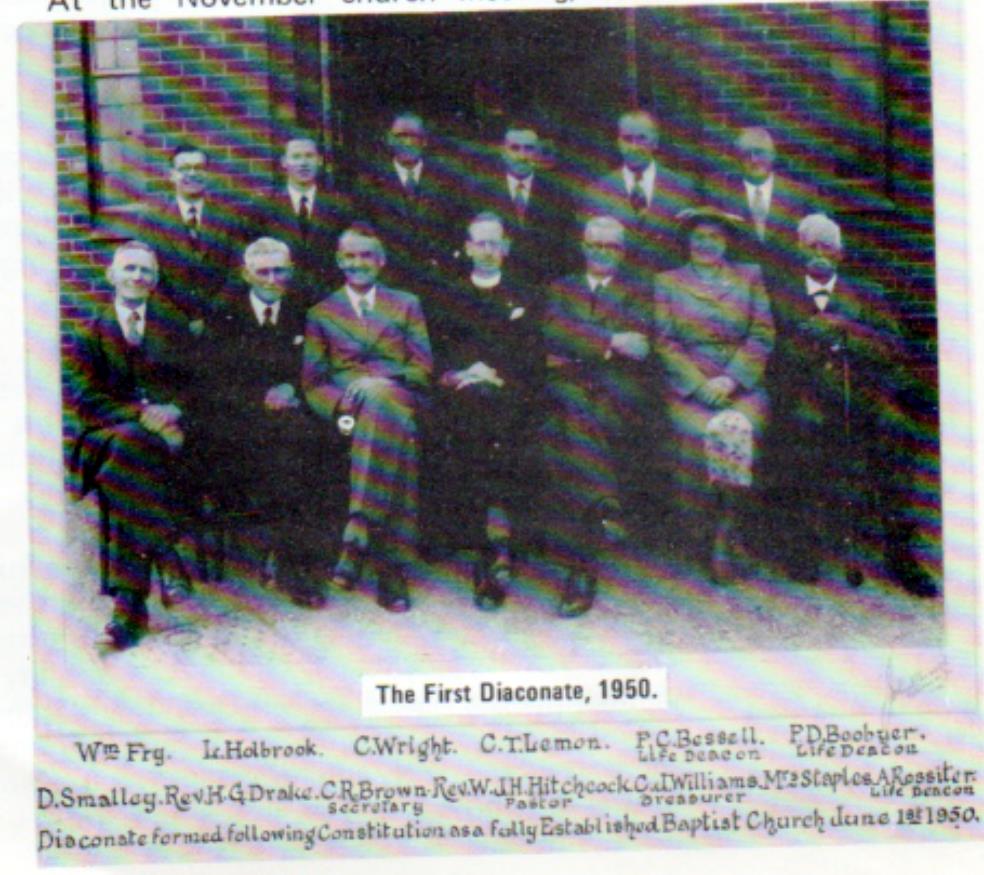
At the November church meeting, the first Deacons were elected. It was resolved that Mr. Frank Boobyer and Mr. Fred Bessell should be made life Deacons in recognition of their loyalty and faithfulness, The first Deacons were:-
Mrs. Marion Staples, Rev. Herbert G. Drake, Mr. Cyril Wright, Mr. David Smalley, Mr. William H. Fry, Mr. Cyril Williams, Mr. C. Reginald Brown, Mr. Lionel W. Holbrook and Mr. Cyril T, Lemon. Mr. Brown was appointed Church Secretary, and Mr. Williams, Church Treasurer.
Church Constitution
One of the first tasks of the new diaconate was to draft a constitution suitable for an “Open Membership’’ Church. Under the heading of Doctrine, it was stated: “The Church shall hold the following doctrines. The Trinity and Unity of the Godhead as Father, Son and Holy Spirit. The Deity of the Lord Jesus Christ. The Sufficiency and Efficacy of Christ’s Sacrificial Death. The Sole Authority and Full Inspiration of the Holy Scriptures as originally written”. Under the heading of Membership, it was stated: “The membership shall be open to all who profess repentance towards God and faith in Our Lord Jesus Christ as Saviour, and whose lives bear evidence of their Christian profession. Members are usually received after Baptism by Immersion, but the Church welcomes to membership all who conscientiously follow Our Lord Jesus Christ”.
Organ
A substantial legacy made possible the installation of a new electronic organ by the John Compton Organ Company. Mr. George Day was invited to give a recital when it was officially opened on the 14th March, 1951.
The assistant organist at Clarence Park, Mr. Alan H, Thompson, offered to play for the Sunday services for a limited period and his offer was gratefully accepted. In the event Mr. Thompson, a very fine organist, stayed on to serve the Church for a number of years, The reed organ was packed up and sent to a Baptist Church in Bombay.
Silver Jubilee
When the twenty-fifth anniversary of the Church was celebrated a short service was held in the old premises in Salisbury Road. With steady growth in every department, lack of accommodation was again becoming a very serious problem and the Deacons decided to approach a firm of architects so that consultations might begin for the planning of a scheme for the enlarging of the premises.
Conversions
Much blessing was being seen in the Young People’s Fellowship, formed by Mr. Hitchcock early in his pastorate. Every Tuesday evening the senior Y.P.F. of some forty teenagers met in the Upper Room (now called The Coffee Bar) for fellowship and Bible study. There was always a good sprinkling of lads from R.A.F. Locking Station; some of them were Christians seeking fellowship and they introduced others who often had not previously been attached to a Church. Many were brought to confess Christ as Saviour, as well as numbers of young people whose homes were in Milton. One recurring feature of the Y.P.F. has been the desire to win other young people for Christ and many evangelistic efforts in the form of meetings, coffee bars and musical gospel outreach have been used. Currently they have hired Worle Youth Wing and a Church hall near the front. Many conversions have been recorded over the years, The Y.P.F. continues to thrive.
In 1953 a series of special meetings was conducted by the Rev. R. W. Aitken and the Rev. W. A. Buchan and it is interesting to note that following closely behind these meetings eleven teenagers were baptised.
Call for Help
It was also in 1953 that the Church at Banwell appealed to Milton for help, and Mr. Cyril Williams, Deacon and Church Treasurer, accepted an invitation to serve as Lay Pastor. He therefore relinquished the office of Treasurer and Mr. Arthur Smith was appointed in his stead. Mr. Williams began his ministry at Banwell at the beginning of June.
In 1954 Mr. Samuel Patterson, a builder who was developing a small private housing estate on land behind the Church, wrote to the Deacons offering to give the fellowship a piece of land adjoining the Church. The only condition he made was that the fellowship should pay the legal costs of the transfer, It was a heaven sent gift which was gratefully accepted and is now proving to be of inestimable value as the Church car park.
Buying a Manse
The lease on the house used as a manse was due to expire in 1960 and in any case had now become too small for the Pastor and his family. The Deacons, after much prayerful thought, felt it would be wiser to try and buy a house for use as a manse, rather than rent another one. After viewing a number of properties, Number 66 Baytree Road, which was for sale, seemed very suitable. The owner was asking £3,750 for it but it was felt that the Church could not pay more than £3,250. However at a Church meeting called to make a decision on the matter, the Chairman produced an envelope containing one hundred five-pound notes! These were the gift of a Church member, who wished to remain anonymous. He had recently come into a legacy, and he wished to put some of it to some special use for the Lord. The prayers of the fellowship had been answered once again, and the way had been made clear to purchase a highly suitable house for a manse. In September, 66 Baytree Road became the property of the Church and was vested in the trusteeship of the Bristol Baptist Association. Towards the end of the year, Rev. and Mrs. Hitchcock arranged an “open day” to enable members of the Church and congregation to look over the house. The wisdom of the purchase was clearly seen later, when part of the large manse garden was sold as three building plots, bringing a considerable sum of money to the Church.
Mission
In 1958, the Rev. Kenneth Toms, then the pastor of Burnhamon-Sea Baptist Church, shared with Mr. Hitchcock in a week's inner mission, which brought blessing to every department of the Church and once more highlighted the need for additional accommodation. A Beginners’ Department was commenced to relieve the situation in the Primary School and one of the Bible classes moved to the Manse for its meeting.
A Youth Crusade was held in the autumn of 1960. The meetings, held over a period of five nights, were attended by over five hundred young people, and were led by Mr. Frank Farley and Mr. Norman Rich, and a number of those attending made their decision.
The Pastor and Deacons were much exercised about Church extension but the original idea of building a new sanctuary on the west side of the existing hall had finally to be abandoned as impracticable, and it became obvious that other possibilities would have to be explored.
Farewell
After the evening Communion service on 4th December 1960, Mr. Hitchcock announced to the fellowship that he had accepted a call to the pastorate of the Church at Crown Lane, Morden, Surrey, and would be taking up his work there in the following March. There was a general feeling of regret at his decision that he felt the time had come to move to a new sphere of service, and evidence of the esteem and affection in which he was held was seen in the crowd that gathered for his farewell service. During Mr. Hitchcock's fourteen years at Milton, his ministry had been marked by sustained evangelistic effort, and he exercised a searching expository pulpit ministry. He loved young people and was very happy in their company and they, in turn, were drawn to him. His wife who shared fully in his work, was a very able speaker, and her gracious and kindly manner endeared her to all who knew her. The Manse was “open house” to anyone and many found it a place of comfort and help in times of sorrow and trouble.
Back to contentsA new ministry, 1961 to 1962
Now the Church was faced with the need to call a new minister but it was a very prayerful people who sought the leading of God and the interregnum was not to be of long duration.
New Ministry
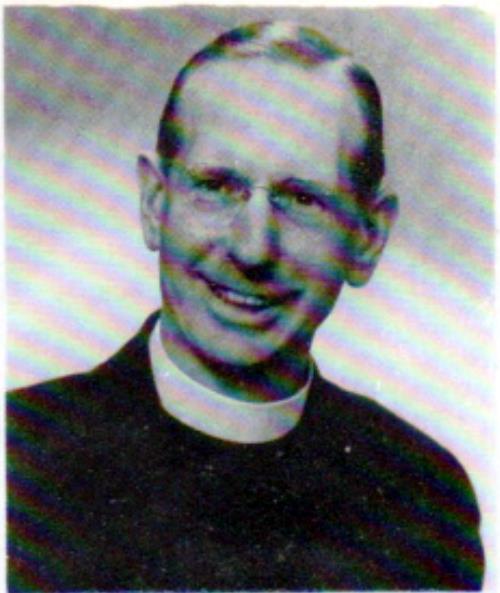
The Rev. Philip H. Gathercole, then at Ampthill near Bedford, was invited to preach and a unanimous invitation was sent from the Church inviting him to the pastorate. He was inducted on the 30th September and commenced his ministry on Sunday, 1st October, 1961.
Call to the Ministry
In September 1961 Raymond Webber was accepted into Spurgeon’s College for a Theological Course. He was the first person to enter the Home Ministry from our Church and in July 1965, his ordination was conducted at Milton when the preacher was Dr. George Beasley-Murray, the Principal. Mr. Webber ministered first at Charlton Kings, Cheltenham, and from 1974 at Portslade on the south coast.
More Missionaries
On 14th March, 1962, a service was held to bid farewell to Don and Ruth Boyes, who were shortly leaving for Bolivia, where they were to work under the auspices of the Bolivian Indian Mission (later re-named the Andes Evangelical Mission). Ruth, who had grown up in the Milton Sunday School, had felt the call to Missionary service and was studying at the South Wales Bible College, where she met Don, and their friendship blossomed into romance. Don also came to realise that the Lord was leading him into service in the foreign field. At one time they contemplated going to the Amazon Basin, but the way was not made clear, and after prayerfully discussing the matter with Mr. Hitchcock, they had offered their services to the Bolivian Indian Mission and had been accepted. So we became a Church having three missionaries on the field, one in India and the others in South America. Our missionary interest was deepened and quickened as we received news of the preaching of the gospel in two continents so far apart. Missionary giving continued to grow steadily.
A growing church, 1963 to 1965
The Den
A team of young people, in an attempt to provide a little more sorely-needed accommodation, went to work on a room over the stables at the Manse and transformed it from an almost derelict state, into quite a pleasant and useful meeting place. It became known as ‘The Den” and was used not only for Bible Class meetings, but also by the Young People’s Fellowship and for get-togethers after Sunday evening services, and later by the Men's Club.
House Groups
At about this time also, Mr. Gathercole started a House Group Scheme. Members were divided into groups roughly determined by geographical location and to each group a leader was appointed, who arranged meetings in different homes within the group from time to time, for prayer and bible study and discussion, and to promote the enriching fellowship which comes from people praying and studying God's Word together. The scheme brought immense blessing to the Church. Through the Groups many friends were brought into Christian service; friendships were formed and grew in the homely atmosphere which was the setting for every meeting. Although the old groupings have now been superseded, some of the groups still continue to meet; continuing testimonies to the success of the scheme.
Church Officers
Since the departure of Mr. Hitchcock, Mr. Cyril Lemon had been assisting Mr. Rex Brown in his secretarial duties, but in January 1963, some change was necessitated when Mr. Arthur Smith felt he must give up the Treasurership, in which he had served the Church for ten years. Mr. Brown was elected Church Treasurer and Mr. Lemon took over fully the duties of Church Secretary.
Changes
The Pastor and Deacons gave very careful thought to the possibility of extending the Church premises with the help of Government finance, under the Ministry of Education’s Voluntary Youth Service Development Programme. It was eventually decided that as the facilities obtained through a Government grant would then have to be used as a recognised Youth Centre, not fully under the control of the Church, it would be wiser not to pursue it further, Changes were made within the sanctuary at this time however; the pulpit was moved from its position at the side of the rostrum to a central place behind the baptistry and a new carpet was provided for the rostrum. The console of the organ was moved to a new position in the balcony and the choir seats were also moved into the balcony.
Stewardship
It was at the November Church meeting in 1963 that the Pastor first talked to the members about Christian Stewardship; that we, our time, our abilities and our material possessions are held in trust from God, and that we should give of these precious possessions systematically, and in true proportion, for His service. That implicit in Stewardship is the principle of budgeting the financial needs of the fellowship annually, and if the Church accepted the challenge, that all giving for the maintenance of the ministry and for Church expenses, and the support of Missions at home and abroad, would be made in the Sunday Offering. The challenge was accepted. It was decided that all giving by members, except for the Annual Thankoffering, should be in the Sunday Offerings. In the December a budget was adopted for the following year, calling for a weekly income of £51, an increase of £8 per week over the previous year,
The decision to practice Stewardship, with all its implications, was a momentous one and no-one will ever know the full extent of the blessing that has followed. We believe it goes on being shown in the amazing giving of the members, year by year, but from the acceptance of the challenge, there seemed to be a clearer understanding that the work is God's, and not ours, and perhaps a fresh realisation of the privilege of the trust committed to our charge. It is interesting to note that there were 223 members on the Church Roll in 1963.
Extensions
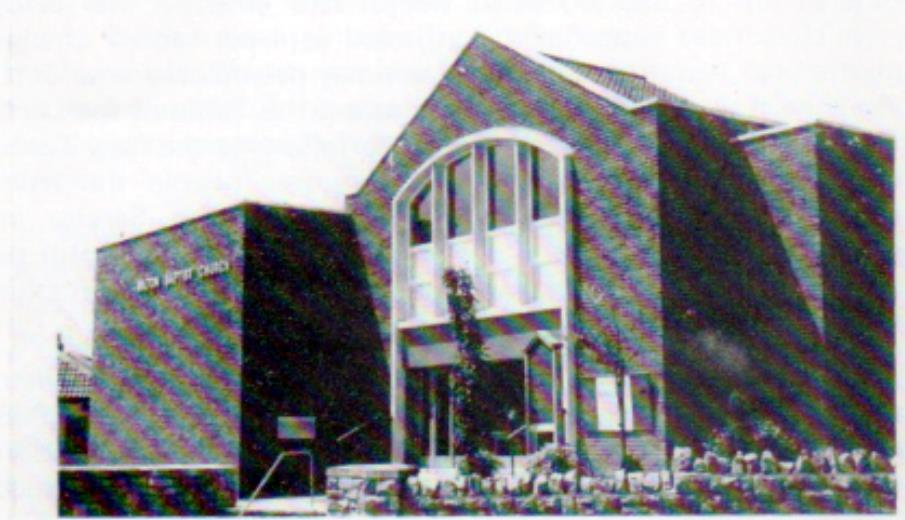
In January of the following year, the Deacons brought to the Church a Scheme of Alterations and Extensions to the premises which was approved subject to “any minor amendments the Deacons may deem it wise to make”, The scheme was to re-design the front of the Church and create a large tiled foyer, separated from the sanctuary by a glass partition, with a balcony above the foyer capable of seating one hundred worshippers. Extra cloakroom facilities were also to be provided and also a large committee room adjoining the balcony. A large hall was to be built on the west side of the Church with a children’s room and storeroom at the rear.
The Scheme went out to a number of builders for tender and the estimate of Messrs. W. J. Pople and Sons, in the initial sum of £12,178 less £800 savings, plus Architect's fee of £800, was accepted, although the final account was to total about £14,350. We were fortunate to have on our building committee, specialists who could give advice at every stage. We shall not forget the contribution of Mr. Derek Jones, a building estimator, who at a critical stage trimmed the specification by a large sum without losing any necessary feature and so made it possible for us to proceed. When the decision to go forward with the Scheme was taken, there was between one and two thousand pounds in the Building Fund, but by the completion date, with the aid of gifts and loans, the amount remaining to be raised was only about £1,000. The Bristol and District Association of Baptist Churches had encouraged and supported the fellowship in every possible way, and when the Baptist Church at Banwell was closed and the Church property sold, the Association generously decided that the proceeds from the sale, some £1,864, should be added to the Milton Building Fund.
Opening
The official re-opening of the Church was held on the 16th January 1965. Mr. Rex Brown unveiled the commemorative plaque at the front of the building and the Rev. H. G. Drake opened the new doors for the first time. The Balcony was officially named the ‘“Banwell Balcony” by Miss Olive Munns and Mrs. Amy Stephens, two friends who had been in membership at Banwell for many years but had now joined the fellowship at Milton, Others taking part were the Rev. Dr. L. G. Champion, then President of the Baptist Union, the Rev. Raymond Brown, the Rev. W. J. H. Hitchcock, the Rev. E. W. Durant, Secretary of the Bristol Baptist Association, and the Pastor. The Rev. Cecil H. Thompson and Mr. Norman Finney were also present.
Worship and service, 1966 to 1975
Milton Singers
In 1966 a small Recorder Group was formed amongst the members of the Sunday School. There were about eight members to begin with, but the enthusiasm and vision of Mr. Eric Darling led to the Group’s steady growth, and there is now a membership of sixty-five girls and boys, with a waiting list of applicants wishing to join. Mr. Darling is assisted by a fine team of Leaders, whose patient and dedicated work has brought “The Milton Singers” to their present high standard of musical performance. Over the years they have ministered in music and song to the blessing of many. They have cut their first record, have appeared on television and radio, and have exchanged visits with a Children’s Choir from a Baptist Church in Groningen, in the Netherlands,
Communion Service
A recommendation from the Deacons was brought to a Church meeting in January 1968, that for a period of two months, the Communion of the Lord’s Supper should be observed at each Sunday morning service, except on the first Sunday in the month, when there would be the usual evening Communion. The meeting resolved that it should be tried for an initial period of six weeks, after which it was further considered and eventually confirmed as a permanent arrangement “until such time as the Church may decide otherwise’. It was generally felt that in meeting around the Table of the Lord each Sunday, the fellowship would be following the New Testament pattern, and would show the younger people the true significance and importance of the Communion Service in the life of the Believer. The Communion Service is still part of our regular morning worship, and the number of worshippers who do not stay for it remains very small.
The Annual Assembly of the Bristol and District Association of Baptist Churches was held here in May 1968, by invitation of the Church, and though our accommodation was stretched to the limit, the occasion was voted a great success.
The local Federation of Old Age Pensioners Association inquired as to the possibility of establishing a Friendship Circle for the elderly, on Church premises. Pastor and Deacons considered the suggestion and appreciated that to offer facilities for such a Club could be part of our Christian service to the community, and as an indirect form of evangelism, it would tend to bring more people within the orbit of the Church. Accordingly, the Church agreed to allow the use of a hall on one afternoon each week for the Circle's activities, and its first meeting was held in February 1969. It is now a very flourishing organisation, with a considerable waiting list of applicants for membership. Well over a hundred attend its weekly meetings and many senior citizens bless it for the friendship and fellowship it provides.
Evening Services
In the winter of 1969 Mr. Gathercole introduced on occasion a more informal service on Sunday evenings and whilst perhaps it did not win the unbounded approval of some of the older members, they were quite prepared to support it both by attendance and by prayer, and it proved to be attractive to the younger people and to those on “the fringe”. One very successful feature of the services has been the interviewing of Christian friends by the Pastor, who by this means have testified to the power of Christ in their lives. The testimony is always supported by the clear and telling presentation of the gospel.
Works Week
The ravages of wear, weather and age make their appearance in fabric and equipment of a Church slowly but inexorably, and many a fellowship has been lulled into a false impression that their premises continue in a good state of preservation, to discover suddenly, to their dismay, that weather and wear and tear, have left their mark and that they are faced with heavy expense for repairs and maintenance of property. Our Deacons have always been very mindful of this, and for some years the Fabric Committee has organised an annual Works Week, when volunteers tackle a host of repair and maintenance jobs and the only cost to the Church is that of the materials used, By this means, hundreds of pounds have been saved every year and our Church has been kept in good repair, and attractive and worshipful. A great debt is owed to many friends who have given generously of their time and skills during Works Weeks,
In May 1970, the Church was honoured when the Pastor came into the Presidency of the Bristol Baptist Association. The Association joined with the Devon and Cornwall, the Western, and the Wilts and East Somerset Associations for a Western Area Assembly at Torquay, and it was there that Mr. Gathercole gave his Presidential address on “The Proclamation of the Gospel in this Decade”.
Junior Church
As in so many Churches, the holding of afternoon Sunday School has posed problems for some time, and in 1971, a Commission was appointed comprising a Chairman, two Church members, two Sunday School Teachers and two Deacons, to investigate the whole matter and, in particular, the relationship of the Sunday School to the Church, Attendance registers were andlysed, questionnaires circulated, and the experience of other Churches studied, A report was made to the Church recommending that from January 1972, instead of afternoon school, Junior Church should meet at 10.15 a.m. on Sunday mornings, and that it would join the congregation in the Church for the first fifteen minutes of morning worship. The recommendation was adopted by the Church, although some members were rather fearful for the success of the venture. It is a matter for thanksgiving however, that numbers attending Junior Church have tended to grow, rather than diminish..
One important new move in the refashioning of the work was the appointment of a Visual Aids Officer, Mr. Evan Craig, to arrange operation in all departments of the film strip and overhead projector, and other visual and audio aids that are a part of modern youth work.
Progress
In 1971 Mr. Gathercole completed ten years of gracious and blessed ministry, during which the Church had moved forward and every year had shown steady progress in all departments. At the December Church meeting reference was made to this and it was resolved unanimously that:-
“We, the members of Milton Baptist Church, in Church meeting, desire to express our deep appreciation of the ministry exercised by our beloved Pastor and his wife during the past ten years. We desire also to assure them of the Christian love and great respect in which they are both held, and pledge our fullest support for them, in prayer and in all practical ways, in the days that lie ahead’, This was the spontaneous tribute and pledge of a happy and united fellowship.
House Parties
In February 1971, the Young People’s Fellowship organised its first weekend House Party. It was held at Kilve Court and was so successful that similar House Parties have been held each year since. They have given the Pastor a unique opportunity of getting to know, in a much closer way, the increasing number of young people which the very live and vital Y.P.F. attracts. Many have been brought to decision for Christ through the ministry of these weekends.
Holy Land
In the spring of 1972 the Church was delighted to learn that there was an opportunity for Mr. Gathercole to visit the Holy Land in company with the Rev. Stephen Levinson, who was leading a party under the auspices of the Barbican Mission to the Jews. The value and influence of his visit has often been noted in the subsequent preaching of the Pastor.
Welcome
In Ephesians we read that “we are created in Christ Jesus, for good works”, that the Christian is God’s workmanship, created in Christ Jesus, and that the purpose of God, implicit in our new creation is service, not just safety. Increasingly, we desire service to be a key word in the life and witness at Milton. Not only the preaching of the gospel to those within its walls, and caring for its own people, but providing a broader service to the community in which the Church is situated, and beyond. Every year it is our privilege to allow one or two Girls’ Brigade or Boys’ Brigade Companies to hold their summer camp on the Church premises, and it was a particular joy in 1974 to entertain in this way the Officers and Boys of a Brigade Company from strife-torn Belfast. Our friends, who came from a district where almost daily there occur shootings and bombings, found Milton a haven of peace, and had a wonderful time. We are looking forward to a return visit from them in July this year (1976).
Flower Shows
In the autumn of 1972, the Church held its first Flower Show and the occasion was so encouraging that a further Show was planned for the spring of 1973. A spring show, and also one in the autumn, have now become established features in the calendar. The Shows are held on Saturday, are followed on the Sunday by a Flower Festival, and the weekend makes an appeal to many folk who do not regularly attend any place of worship.
The Ministry
By the end of 1973, the installation of gas-fired central heating throughout the premises was brought to completion, Early in 1974 portions of Sunday services were recorded on tapes, so that they could be played to members and friends who were unable to attend services. Many friends gratefully avail themselves of this means by which they can share in the worship of the fellowship, and testify to the blessing they receive.
Publicity
For over twenty-five years now the monthly ‘Messenger’ has been the main organ of inspiration and information, under the editorship firstly of Rev. W. H. Hitchcock, followed by Mrs. Irene Griffiths and Mrs. Doris Nelson. The ladies combined typing skills with journalism and, with the loan of a duplicator in recent years, we have been able to produce all the inside contents ourselves. In 1975 we purchased our own Roneo and housed in the home of operator Mr. Ron Tremlin, it is constantly at the service of the Church and Christian organisations,
Caretaking
A succession of painstaking caretakers have kept the sanctuary sweet and clean and ensured that our premises, in constant use for the Church and community (there is a regular infant welfare clinic and a daily play group) are kempt and attractive. The Church is always beautified by flowers on Sundays, and the acquisition by some of our members of gifts of floral artistry makes the Flower Festivals and other special occasions memorable.
More Deacons
With the steady growth and progress of the work in all Departments and the steadily increasing Church membership the Pastor and Deacons felt it would be wise to increase the Diaconate from nine to twelve members, and the Church Constitution was duly amended to allow of this in July 1974, The Church has now two Life Deacons, Mr. Rex Brown having been honoured in this way in 1968, and Mr. Albert Hunt in 1971. These brethren have given, and continue to give, dedicated service in the fellowship, and have won for themselves a firm place in the affections of the members,
Sabbatical
At the beginning of 1975, Mr. Gathercole was granted leave of absence from all pastoral duties for almost three months. This period of sabbatical leave, after thirteen years of very fine ministry, was to afford him time for reflection, spiritual and mental refreshment and for further study. He spent the time in Oxford, where he engaged in community service and shortly afterwards secured the University of London “Diploma in Social Studies”.
Through the kindness of the Principal of Regents Park Theological College, the Rev. Dr. Barrie White, the Pastor was able to enjoy College hospitality during his stay in Oxford.
By making this 'sabbatical' possible for Mr. Gathercole, the Church took the opportunity to express in a practical and helpful way its deep appreciation of his ministry. Whilst the fellowship was excellently served by visiting preachers during his absence, it was a very happy fellowship that welcomed him home at the end of his leave.
Back to contentsOrganisations and the Brigades
Organisations
In this brief history, very little has been said of the Women’s Work, the Men’s Club or the Boys’ and Girls’ Brigades, and yet they are vitally important organisations functioning under fine and dedicated leadership.
The Baptist Women’s League since 1932 has supported missionary work by making children’s clothes, coloured blankets and promoting an Annual Sale of Work which has contributed thousands of pounds to Christian work at home and abroad.
Of recent years all Church organisations have shared in these joyful and generous occasions. Unstinting service by many women in the Church has been rendered to the two Free Church enterprises - Abbey Gate Home for the Elderly, and the Graham House Hostel for Women and Girls. Especially active as an inspirer and worker was Mrs. Gwen Smith, the Secretary of the League from 1954 until her home-call in May, 1976. She was also Secretary of Graham House from 1969 and rendered notable service to needy women and girls in Weston-super-Mare,
The Baptist Women’s Own has provided opportunity for fellowship in a devotional atmosphere for many years. Notable amongst a loyal team of workers was Mrs. Rachel Stock who was an untiring Secretary for twenty-five years, until her passing in 1964, An enthusiastic organiser, she took coachloads of women on her summer outings to resorts all over the West Country, and once hired a train to take them to Porthcawl.
The Women’s Evening Fellowship, whilst a younger organisation, fills a very important need with its interesting and friendly meetings for all ages.
The Men's Club, formed in the autumn of 1963, has been the means whereby many links with the Church have been strengthened, It speaks well for them that the officers elected then - Messrs. C. Wright, N. Tench and S. Terrell - have served continuously to this day.
Brigades
There was a Boys’ Brigade in the very earliest days of Milton and this was started at Salisbury Road by a good Methodist friend called William Holder. When he could no longer continue, the Brigade was officered by Mr. Rex Brown, Mr. Cyril Wright and Mr. Archie Wright, and they continued in service for some years with considerable success but then, for various reasons these brethren were unable to continue as Leaders and the Brigade was disbanded. In 1965, Mr. and Mrs. Alan Griffiths started a Life Boys’ Section, then a Junior Brigade in 1967 followed by a Company Section in 1968. Mr. Griffiths continued in the work until his home-call in 1970 and Mrs. Griffiths is still active in leadership of the Junior Section. The Company Section thrives under the leadership of Mr. Jeremy Smith. Mrs. Gathercole has captained the flourishing Girls’ Brigade since 1961.
Back to contentsThe Jubilee and the future
Our thoughts have so far been concentrated on past history, and in so short a history it has only been possible to mention some of the many facets of the ministry of our Church, but the fact that others may not have been mentioned, does not mean that they are of less value as part of our ministry. We are grateful to all who have faithfully and tirelessly spent themselves in the work of the Lord here.
The Future
And now, what of the future? As we step out on the next fifty years, the past and the present must encourage and inspire us. At the end of this Jubilee year, with the implementation of the Jubilee Scheme, we shall be better equipped for service than we have ever been. Our electronic organ has reached the end of its life and much of the Church seating, now thirty-eight years old, is worm-eaten. The installation of a pipe organ and new seating for our Church will mark in an appropriate way, this very special year,
Our membership is now well over the three hundred mark and growing, and attendances at our Sunday services continue to increase, so that lack of accommodation is still a problem, but a problem which we accept in a spirit of deep thanksgiving.
Missions
In 1975 over 25% of our income was given for Missions at home and abroad. The last Annual Report of the Bristol Association records twenty-one baptisms at Milton, which is heartening for the times in which we live. Though we minister to many retired people, youth abounds,
Prayer
Our witness since the beginning has been sustained by prayer at home and church, often in connection with Bible Study. For many years Mr. Hitchcock ran a successful Bible School. During Mr. Gathercole’s ministry for some years there was a fortnightly meeting to pray for the sick. Our regular Wednesday meetings are not now so well attended but there is a keen spirit and more participation. Each year the week before our Church Anniversary is marked by a Week of Prayer. A recent innovation is a monthly deacons’ prayer meeting.
Singing
An important feature of our witness is the desire to sing the Gospel. Our Church Choir, which has sung many cantatas in village churches as well as contributing to Sunday worship, has not been able to maintain regular ministries of song recently, but we believe that singing the Gospel is a way to open many hearts to spiritual truth.
The Y.P.F. have an amplified group “Icthus” as well as a folk group “Psalm”, and recently the men have commenced a Gospel Male Voice Choir.
Wider Family
We are mindful of our indebtedness to the wider family of Baptists within our Association and Union, from whom we have received both financial and spiritual support, and we intend to maintain the warm relationships of fellowship and service. We are conscious also that we witness to the Gospel in Weston-super-Mare with Churches of many denominations who call upon Jesus Christ as God and Saviour and with whom we realise a growing sense of unity. For instance, in 1973, our Pastor led all the Churches in the town in a “Family Week” which by way of an exhibition, and public events, reminded residents of the importance, under God, of family and community life. In January 1976 our Pastor exchanged the ministry with the Vicar of Locking, and conducted Evening Prayer at St. Augustine’s Church. In November 1976 we shall be sharing in “Christian Outreach”, in which many groups of Christians are uniting together to win people for Christ.
We recorded the belief of Mr. J. W. Lawrence that Baytree Road would one day be the centre of Milton. We applaud his vision and the strategic site he found for us. What he could not have foreseen was a motorway within two miles, and housing development, undreamed of in his time, that gives us tremendous scope for witness and service. Furthermore, our convenient situation in Woodspring, with excellent car parking facilities, makes us an accessible meeting place for both Baptists and other Christian groups who wish to hold meetings.
Variety
We have received into our Church over the years many members by transfer from Churches in Wales, Birmingham, Bristol, London and other parts, This brings colourful variety to Church life, but means we must integrate those who come from widely different Church outlooks, and quite a few from other denominations who are attracted by our evangelical witness, This enriching fellowship we count a privilege, and we discover that Christian love has a marvellous bonding quality.
Diverse Harvests
Looking back over the pages we wonder whether we have written it as a total success story, and thus have not been entirely fair to the facts. Though it is a healthy attitude in life to major on the victories and forget the failures, we must not leave you with the idea that we think ourselves exemplary and self-satisfied. Like the Church in every age, the soil we offer to the seed of the Gospel is often deficient, and produces a diverse harvest. The field has not always been fruitful, and there have been not a few thorns.
We do not always agree and sometimes have to agree to differ. We have our spiritual casualties that cause us sadness. We have to say to some: “You did run well. What hindered you?” No doubt we have missed many opportunities in ploughing, sowing and reaping.
Blessings
We count our blessings. Milton is in the beautiful West Country and we live in a developing area, We are thankful for leadership resources, We do not have the heartbreaks of others in inner city areas or vast housing estates. These factors are in our favour, and we know we ought to be a thriving Church. One purpose of this history is to promote our sense of gratitude, and to remind our members of our responsibilities. “To whom much is given much will be required”. Please pray with us that we may be humble and alert to God's designs year by year.
The Present Ministry
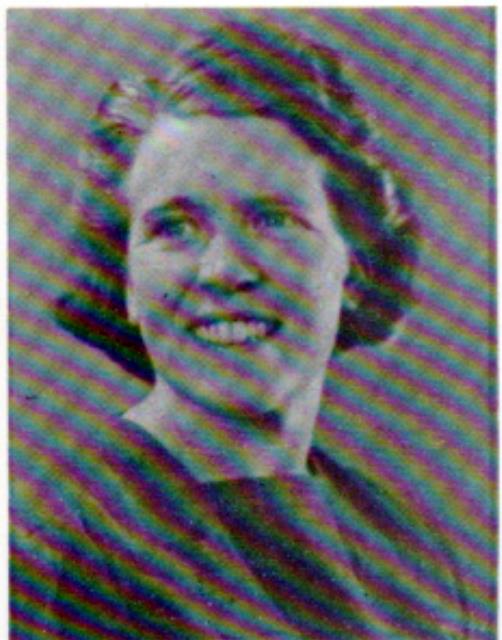
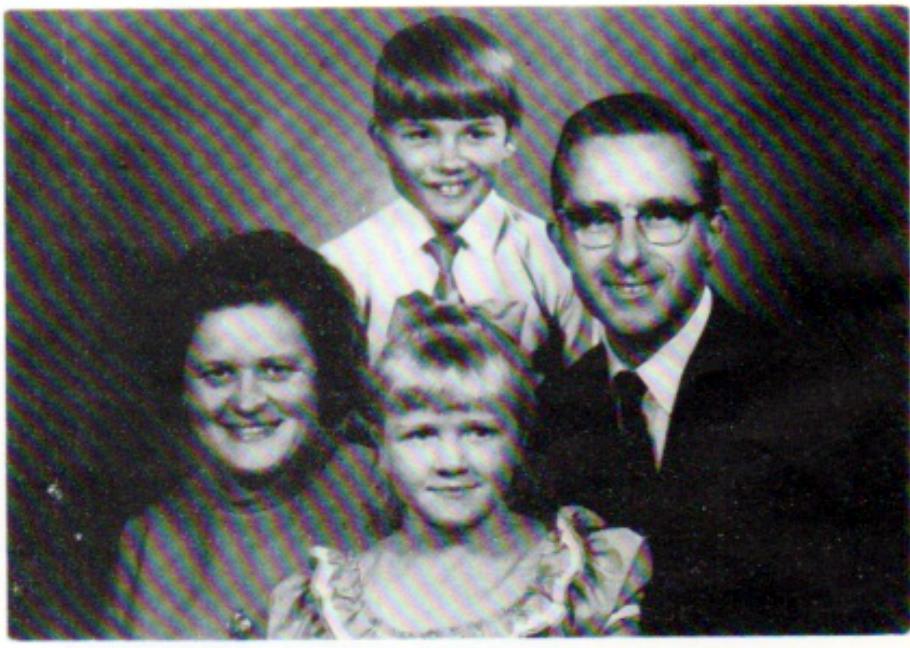
We are very blessed in having Mr. and Mrs. Gathercole to lead us. Our Pastor has outstanding preaching gifts, being able to present the great truths of our faith in a simple and attractive and telling way. With this he combines a gracious and gentle personality, and a compassionate heart, which makes him a welcome visitor to any home or sick bed, and the spiritual quality of his leadership inspires and encourages his people. In all his pastoral work he is so loyally and generously helped by Mrs. Gathercole, who also has considerable gifts as a speaker, with which is combined her nursing skill and understanding of human problems. Quite apart from all their other work, they exercise a wonderful ministry at the Manse, where their loving hospitality and sympathetic help is available for any who have a need, or problem, or sorrow. During the years they have also brought up a family of five, and it has been a joy to watch their children grow up and each, in turn, witness for the Lord.
God With Us
We began with the thought that past, present and future may all have significance at one point in time. “Today is the harvest of yesterday, and the seedtime of tomorrow”. Especially is this so for the people of God who believe that their lives are part of His plan for the world. Through our fifty years of witness, some fruit is to be seen, and we are grateful to have served in His harvest fields. We pledge ourselves to fulfil our assignments in the years to come. We do so in the spirit of the Apostle Paul who wrote:-
“God gave the growth. So neither he who plants nor he who waters is anything, but only God who gives the growth”.
(1 Corinthians, 3. 6-7)
Back to contents